
For those who live their faith with sincerity, the “mystery of Easter” is not an incomprehensible enigma, but an inexhaustible reality: a source of ever-new meanings that we will never cease to discover.
The starting point is that the Lord’s tomb was found empty and that He revealed Himself to the women, the disciples, and hundreds of witnesses. As St. Paul writes, the heart of our faith is this: Christ died for us, was buried, and rose again on the third day (cf. 1 Cor 15:3–5)

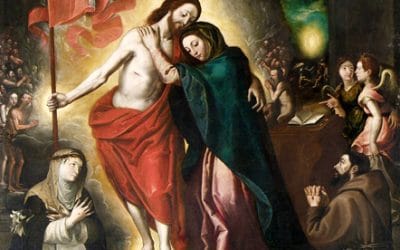
Christianity, therefore, is not the legacy of a deceased person, but a relationship with a living person. Jesus is not “the one who lived,” but “the One who lives” today. He is the Living One who transforms our horizon, offering us concrete hope even when the future seems like a dark tunnel or when violence and evil seem to have the last word, as the increasingly dramatic events reaching us every day from every part of the world seem to subtly suggest to our reflection and judgment.

Easter life brings with it an apparent paradox: a new existence that is born, incredibly, from a tomb. This, however, is, in the Gospel sense, the very same logic of the grain of wheat in the Gospel: only by dying in the earth can it bear fruit. We, too, experience “fruitful deaths” every time we set aside our selfishness, when we put the needs of others before our own desires, or when we accept a personal sacrifice for the sake of justice and fraternal harmony. These are not signs of defeat, but seeds of true life.
It is therefore important not to lose sight of the signs of resurrection that the Lord causes to blossom around us and within us. As we draw near to the liturgy of these days, we come into contact with an inexhaustible Life that pours into our small lives.
My hope is that each of you may make room for this Life, recognizing in Jesus the One who “died out of love and lives among us,” and in turn becoming bearers of gestures of hope and Franciscan joy in our fraternities and among the people of God whom Providence has entrusted to us.

0 Comments